
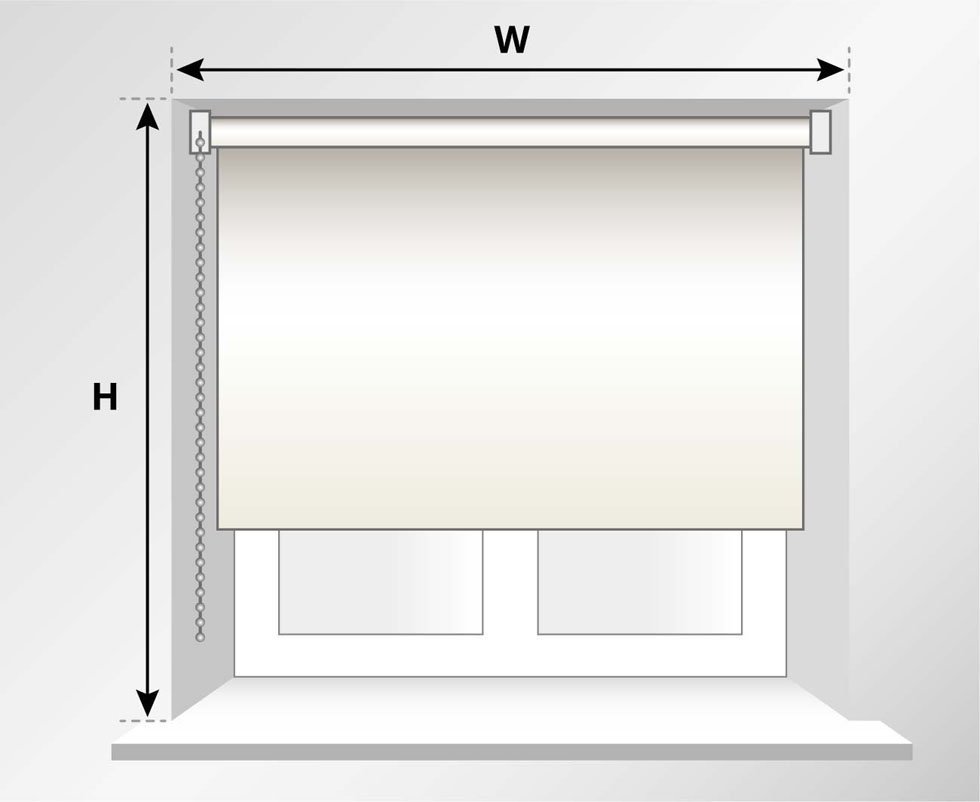
This guide covers everything you need for measuring windows for blinds in the UK, from choosing whether the blind will fit inside the window recess or sit outside it, through to bay windows and specialist frames. The Shutters365 measure windows for blinds resource extends this guide with product-specific templates and video walkthroughs.
The complete measuring guide for blinds in UK windows
Before you measure for blinds, decide whether the blind will sit inside the window recess or be fixed to the wall or architrave outside it. The difference comes down to the space available, the look you want, and how square the window frame is.
Inside recess or outside, making the right choice
For a recess fitting, you need enough recess space and a clear route for the blind to operate. An inside fit gives a neat, built-in finish, but it only works when the depth is sufficient and there are no handles, locks, or other obstructions inside the recess. By contrast, outside fixing is often better for shallow or uneven openings and gives broader coverage than many window blinds fitted within the recess.
- Inside recess: requires a minimum 30mm depth and works best when the recess is clear and the blind can fit inside the window with no clash points.
- Outside recess fitting: recommended for shallow windows or imperfect frames; around 85% of UK installations use this method because many openings are not perfectly square.
- Square check: measure diagonally from corner to corner in both directions. If the figures differ by more than 5mm, outside fitting is usually the right choice when a straighter hang matters.
From there, the Shutters365 window measuring guide explains how to record each measurement correctly before you order.
Step-by-step measuring technique for any recess
Accuracy starts with the tool. Use a steel tape measure: cloth tapes can stretch, and that affects the final measurement.
- Width: measure the recess width at the top, middle and bottom, then use the smallest measurement.
- Height: measure the drop at left, centre, and right, again using the smallest measurement for an inside fit.
- Depth: check from the front of the recess to the window to confirm the blind width, brackets, and fabric stack have enough space to fit inside the window recess.
From there, write everything down in millimetres and label each opening clearly. For recess fitting, submit the recess width and height exactly as taken; manufacturers apply their own deductions, so you should not alter the figures yourself. That is worth knowing before you order, especially if you are comparing blind width to the visible opening.
Recess depth requirements and blind type specifications
Depth varies by product, so check the specification before you measure and buy. This matters for window blinds, shutters, and any made-to-measure system where the blind must fit inside the window recess cleanly. The table below is the reference point for recess space in UK installations.
| Blind type | Minimum recess depth (top fix) | Minimum recess depth (face fix) |
| Roller blinds (up to 260cm wide) | 50mm | 65mm |
| Roller blinds (over 260cm wide) | 85mm | 80mm |
| Roman blinds (standard) | 45mm | 65mm (motorised) |
| Vertical / window blinds | 75mm | 75mm |
| Day & night blinds | 80–90mm | 80–90mm |
| Inside-mount shutters (76mm blades) | 45mm | — |
| Inside-mount shutters (89mm blades) | 50mm | — |
Measuring guide for bay, sash, and specialist windows
Once standard recess measurements are clear, specialist shapes follow the same logic. Bay windows should be measured as separate sections, not corner to corner across the full bay, and the same approach applies to how to measure windows for decorative shutters. Each panel needs its own width, height, and label.
For sash windows, take the width at the top, middle, and bottom and use the narrowest point, then check the height in the same careful way. If tiles line the recess, measure between the tiles because that is often the tightest part of the opening.
Where frames are unusual, photos help support the written measurement. This is especially useful if there are curves, handles, or other obstructions, or if you are ordering made-to-measure panels for a bay recess. For added support, Shutters365 also provides a detailed window measuring guide for DIY shutters.
Frequently asked questions
How do I measure the width and height for a blind to fit inside a window recess?
For a recess fitting, start with the window recess. To measure blinds properly, measure the width in three places: top, middle and bottom, then use the smallest measurement as your recess width.
From there, measure the height at the left, centre and right, again taking the smallest figure. This allows for any unevenness in the recess, so the blind sits correctly in the opening without catching.
Once you’ve measured, record every measurement in millimetres and check the width at least twice. Submit the full blind width exactly as taken: any manufacturer deductions are applied automatically, so you should not alter the blind width yourself.
How do I know whether to choose inside or outside recess fitting for window blinds?
The decision comes down to recess depth and squareness.
If the recess depth meets the minimum for your blind type, an inside fit can work well: 50mm for roller blinds up to 260cm, and 75mm for vertical blinds. By contrast, if the diagonal check shows more than 5mm difference between corners, or the recess is shallow or obstructed by handles or fixtures, outside fitting is usually the safer option.
For an outside fit without an architrave, add 100mm in total to both width and height. That creates enough overlap to reduce light gaps, and in practice around 85% of UK installations use outside mounting for these reasons.
What is the correct way to measure bay windows for blinds?
Measure each section separately, treating every panel as its own window.
For each panel, take the width at the top, middle and bottom, then use the smallest figure, and repeat for height. Label each measurement clearly so every section stays matched to the right opening.
From there, the same principle applies to decorative shutters fitted in a bay. Paper L-frame templates sized 47mm × 37mm can be used to confirm positioning at each return angle, and photos of each section, including where the panels meet, help the manufacturer check fitting requirements before production.
How much will my shutters cost?
Pick your window and size — the preview updates as you go. No details needed.