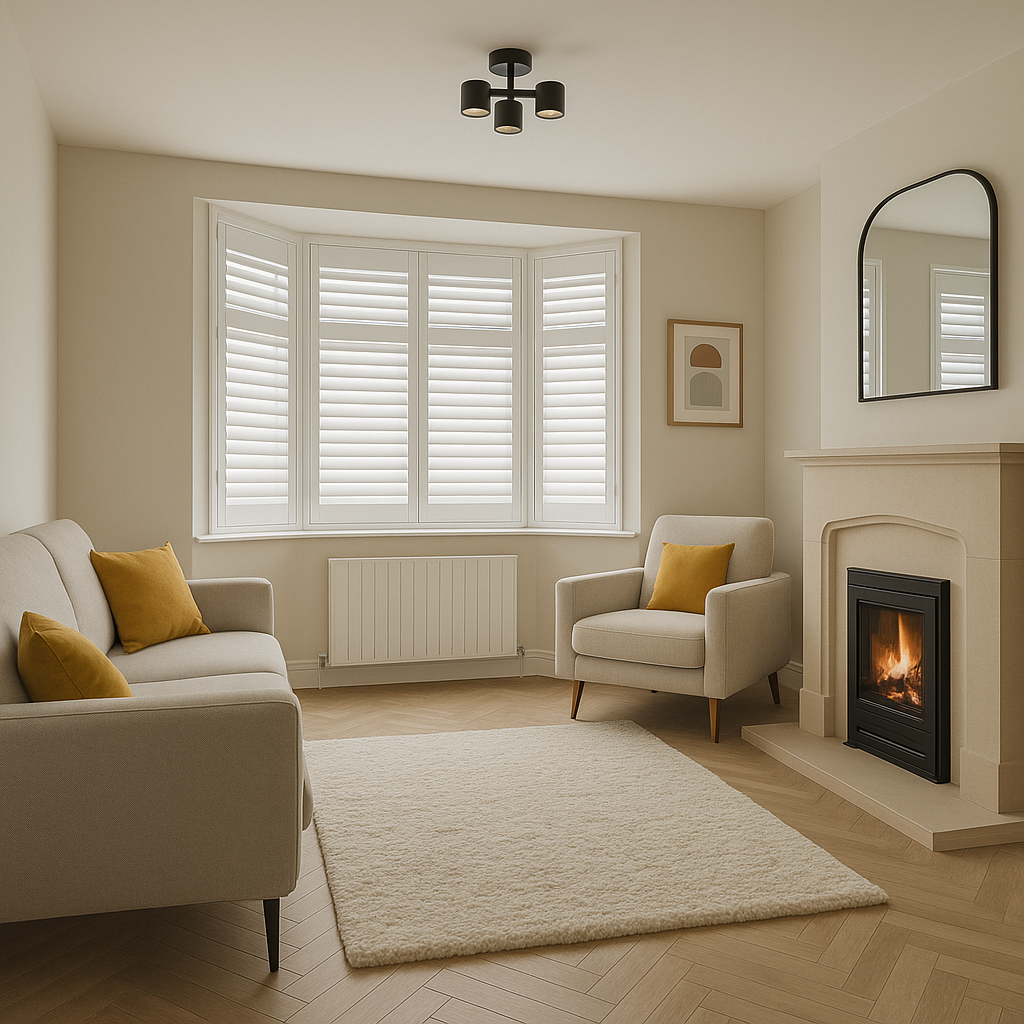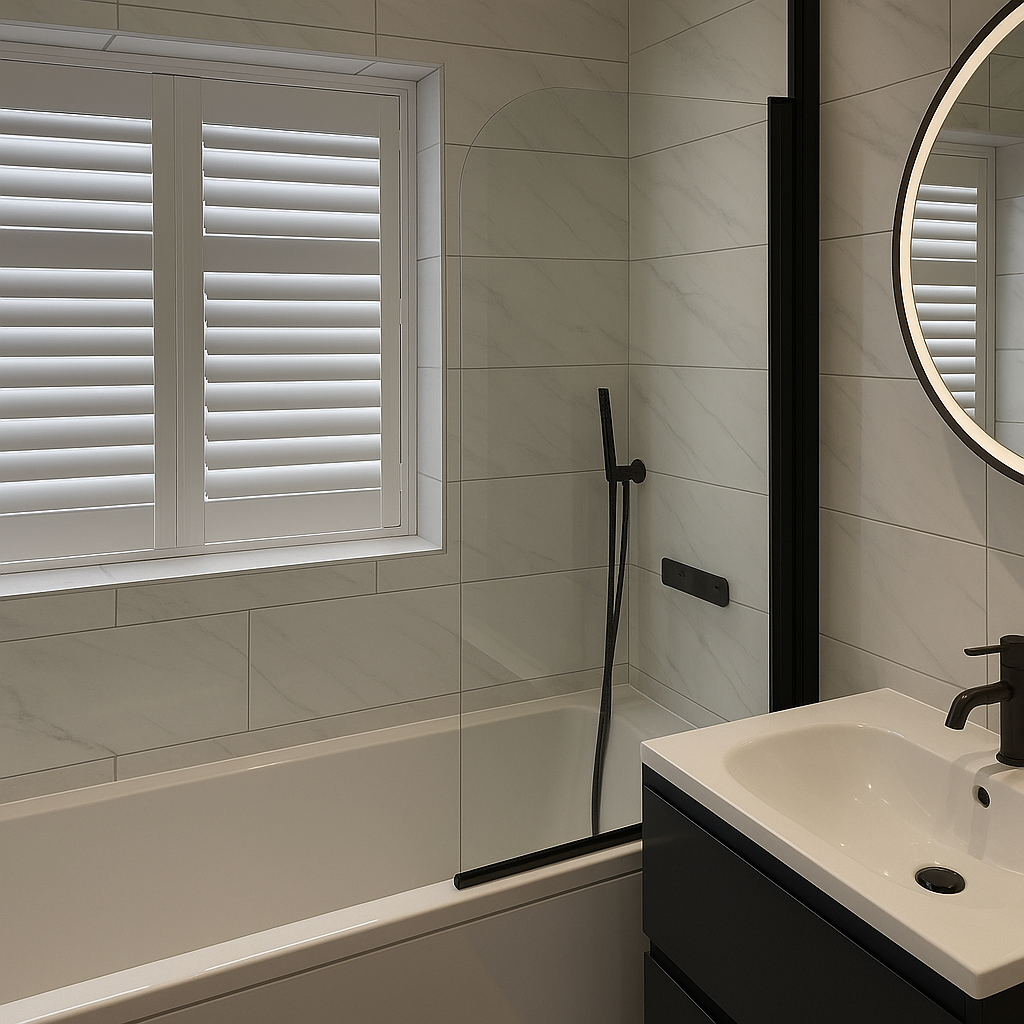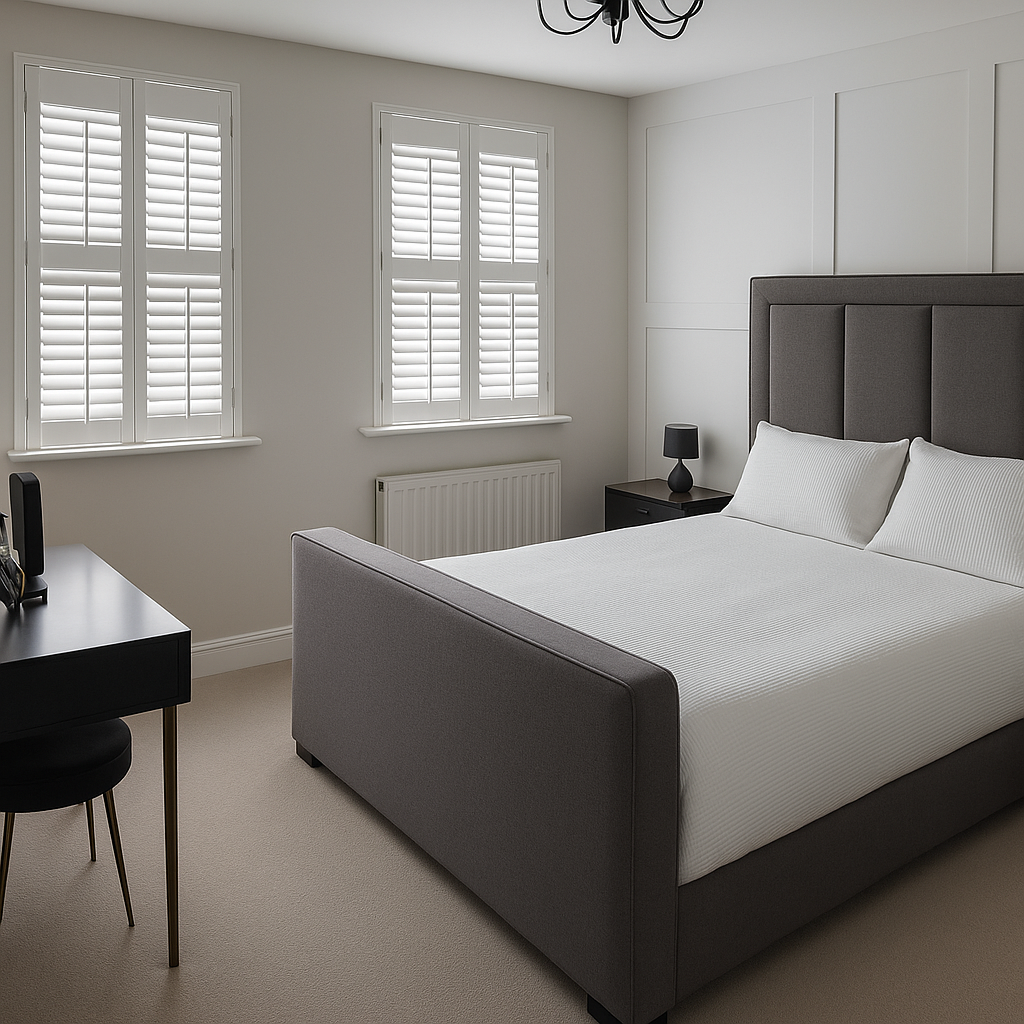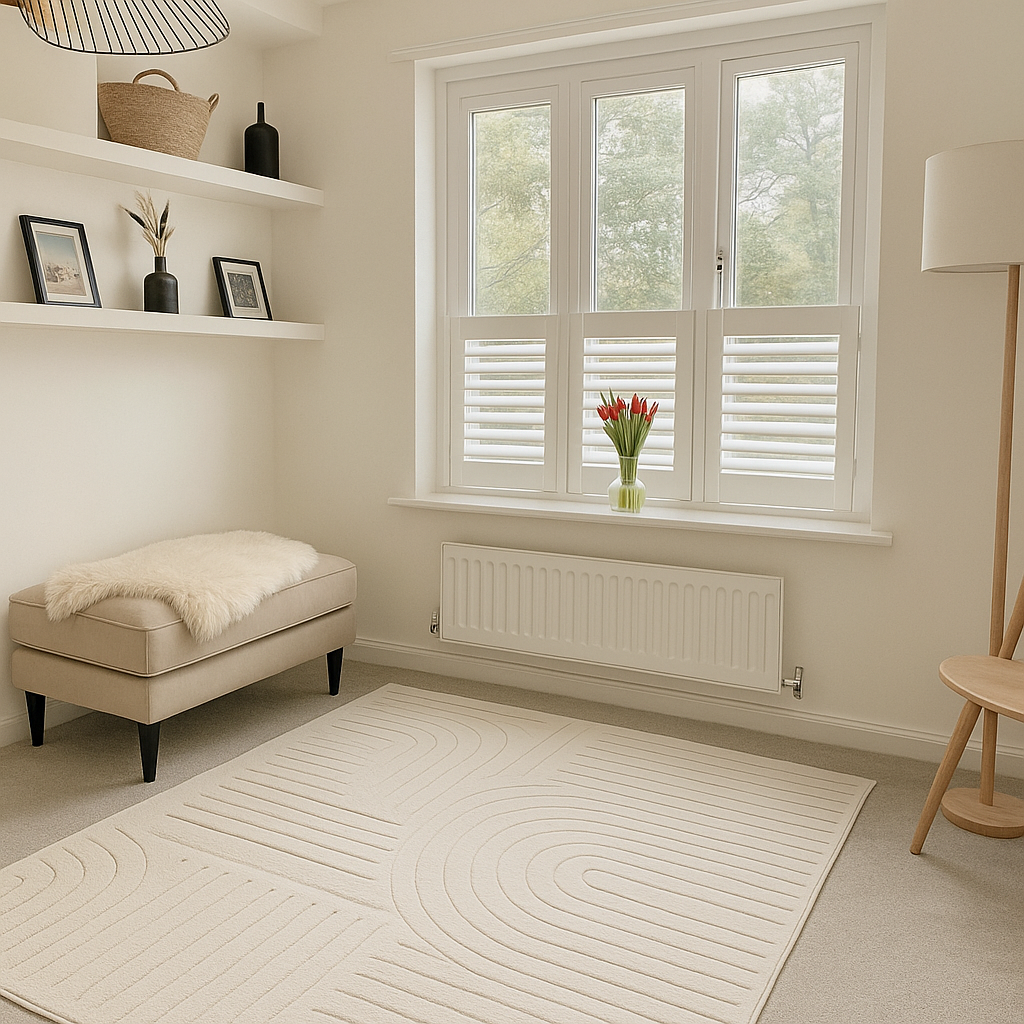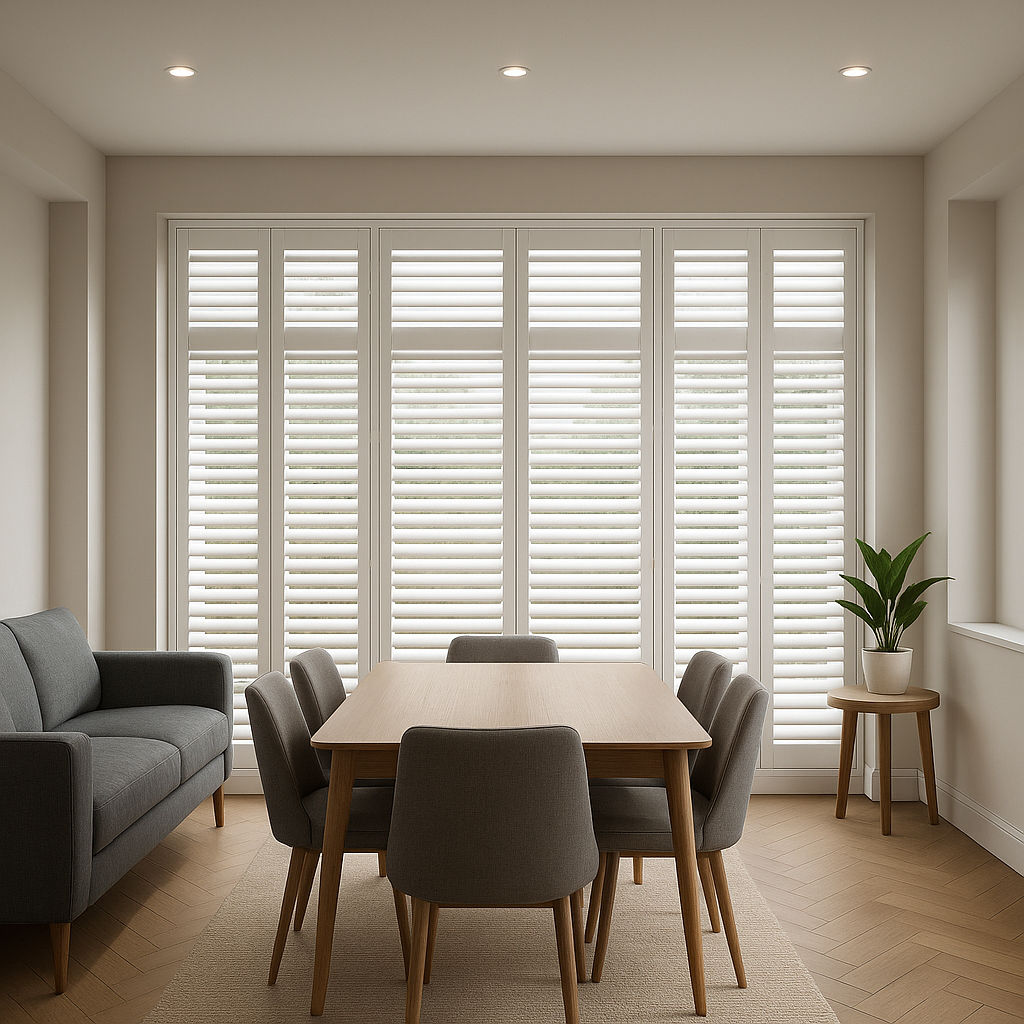

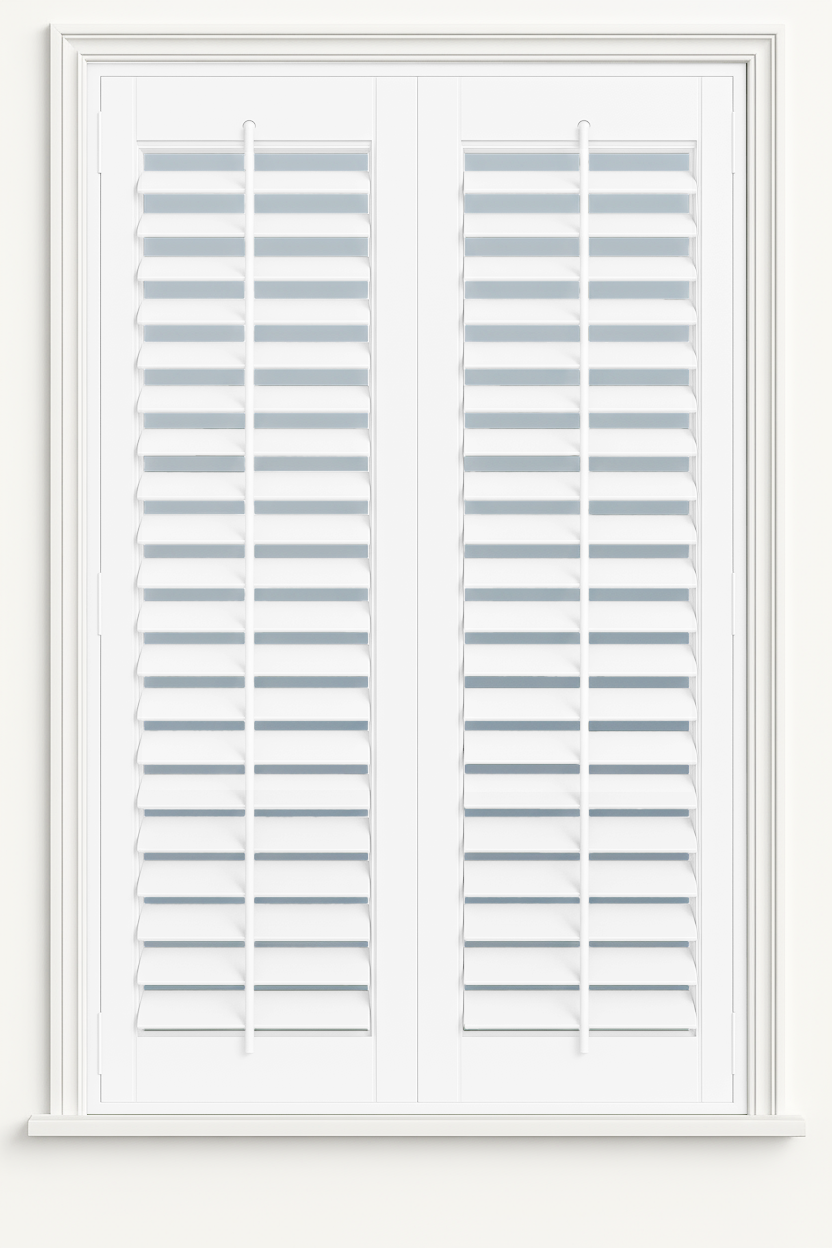
Choose from three premium shutter materials, each designed to suit different spaces in your home:
-
Faux Wood (PVC): Waterproof, durable, and perfect for kitchens, bathrooms, or any humid environment. Available in 4 classic colours and backed by a 2-year guarantee.
-
Paulownia Hardwood: Lightweight and eco-friendly, this natural wood is ideal for larger windows thanks to its excellent strength-to-weight ratio.
-
Basswood Hardwood: A smooth, dense timber regarded as our premium choice for a refined, high-end finish.
👉 Both hardwood options can be customised in 22 painted finishes and 4 natural wood stains, giving you the widest range of styles for your home.
💡 Design Tip: For bright, airy spaces, lighter stains and painted finishes can help maximise natural light. In cosier rooms, deeper stains and bold colours create a warm, inviting feel.
Use the configurator to customise both the style and function of your shutters — the options you see will adapt to your specific window dimensions.
-
Louvre size (slat width): Choose from 64 mm, 76 mm, 89 mm, or 114 mm. Larger louvres let in more light and give a sleek, modern look; smaller ones suit a more classic aesthetic.
-
Panel configuration: This controls how your shutter panels are arranged and which way they open.
• L = the panel is hinged on the left and opens left.
• R = the panel is hinged on the right and opens right.
• 2 panels: “LR” means they meet in the middle (one opens left, one opens right).
• 3–6 panels: A sequence of Ls and Rs shows how panels fold — e.g. “LLR” (two left, one right), “LLRR” (two left, two right), or “LLLRRR” (three left, three right). -
Mid-rail vs divide point:
• Mid-rail (full-height): Adds strength and allows independent tilting of top and bottom louvres.
• Divide point (tier-on-tier): Creates a fixed break, enabling separate top and bottom panel movement.
💡 Design Tip: Adding a mid-rail at the same height as your window frames or natural break points creates a balanced, seamless look that blends perfectly with your existing windows.
Once you’ve chosen your shutter style, the configurator lets you customise the finishing details to match your home.
-
Hinge colour: Available in White, Black, Chrome, and Brass.
• White – blends seamlessly with most painted shutters for a clean, uniform look.
• Black – creates a striking contrast, ideal for darker interiors or where you want the hinges to stand out as a feature.
• Chrome – a polished finish that works well in modern homes, especially alongside chrome door or window hardware.
• Brass – a warm, traditional option that complements heritage properties or classic décor. -
Tilt rod options:
• Classic – a central rod for a traditional look.
• Offset – a rod placed to one side of each panel for a neater, more balanced style.
• Clearview – no visible rod, giving a sleek, modern appearance and unobstructed view.
• Hidden – a slim, discreet rod at the edge of the louvre for a subtle finish.
💡 Design Tip: Match hinge colours to your existing window handles or fixtures for a coordinated finish, or choose a contrasting hinge to turn a practical detail into a subtle design accent.
Frames
Frames give your shutters strength, help with installation, and ensure a neat, professional finish. The frame is fitted to your recess or wall first, and then the shutter panels are mounted inside.
-
L-Frame: The most popular option. A simple square frame that works for almost all windows, either inside or outside the recess. Easy to fit and gives a clean, versatile look.
-
Z-Frame: Designed for inside mount only, with a decorative trim that overlaps the wall. This is useful if your recess isn’t perfectly square or has small gaps. If you have a projecting sill, the bottom of the Z-frame must be sill cut so it sits flat on the sill. However, if the sill is very deep, a Z-frame may not sit correctly, and an L-frame with sill cut is usually the better choice.
Frame sides:
-
All: A 4-sided frame (top, bottom, left, right). Best for flush recesses or windows without a projecting sill.
-
All with sill cut: A 4-sided frame where the bottom is shaped to sit neatly over your sill. The most common choice for windows with a projecting sill.
-
Left Right Top: A 3-sided frame that leaves the bottom open, so shutters rest directly on the sill. Less common, but can work if the sill is level and you don’t want a bottom frame piece.
-
Left Right Bottom: A 3-sided frame with the top open, mainly used for arched or shaped windows.
💡 Design Tip: For most windows, an L-frame with All sides or All with sill cut is the simplest and best choice. Use a Z-frame if you want the decorative trim or need to cover uneven recesses — but only with a sill cut if your window has a projecting sill.