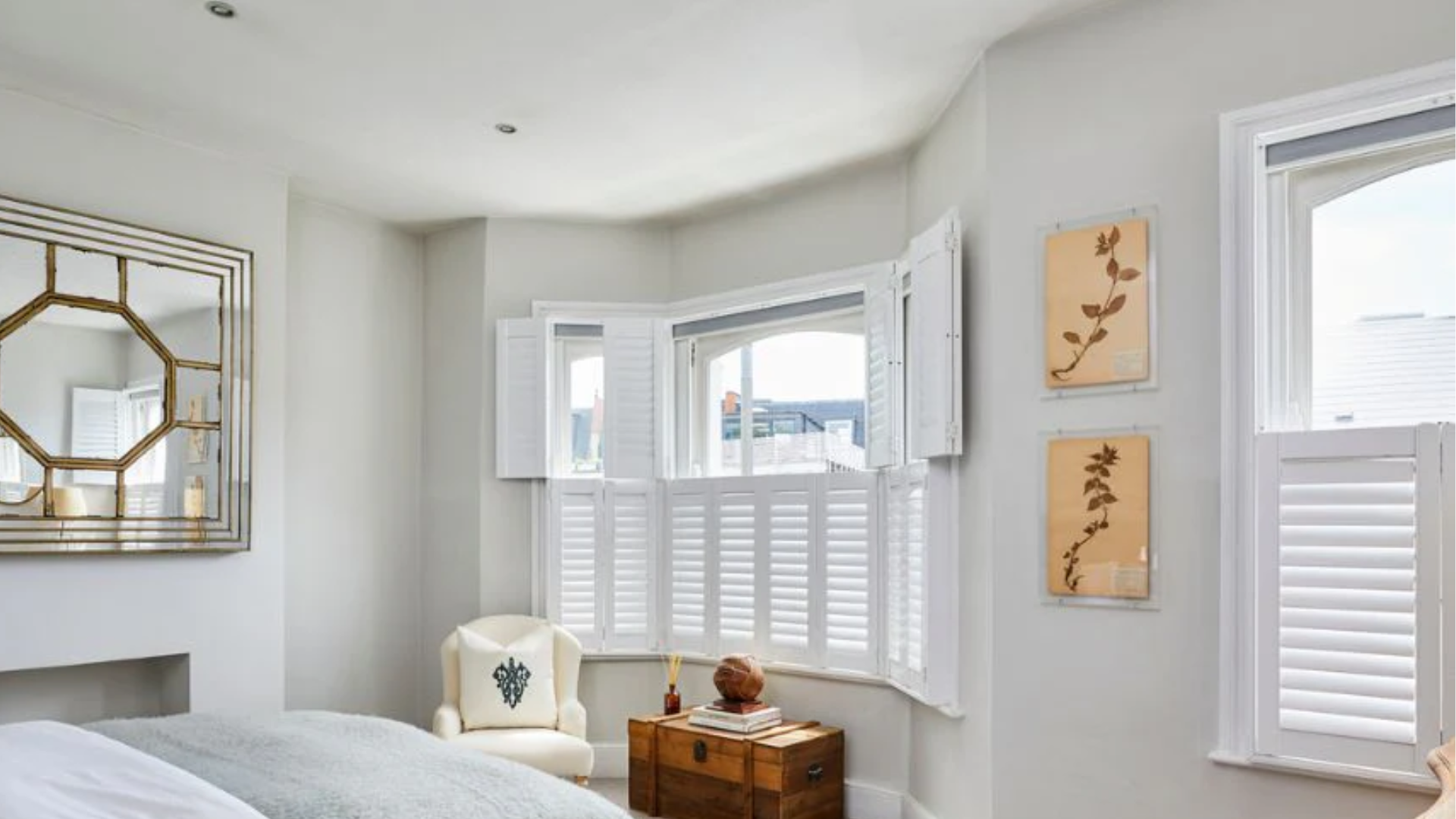
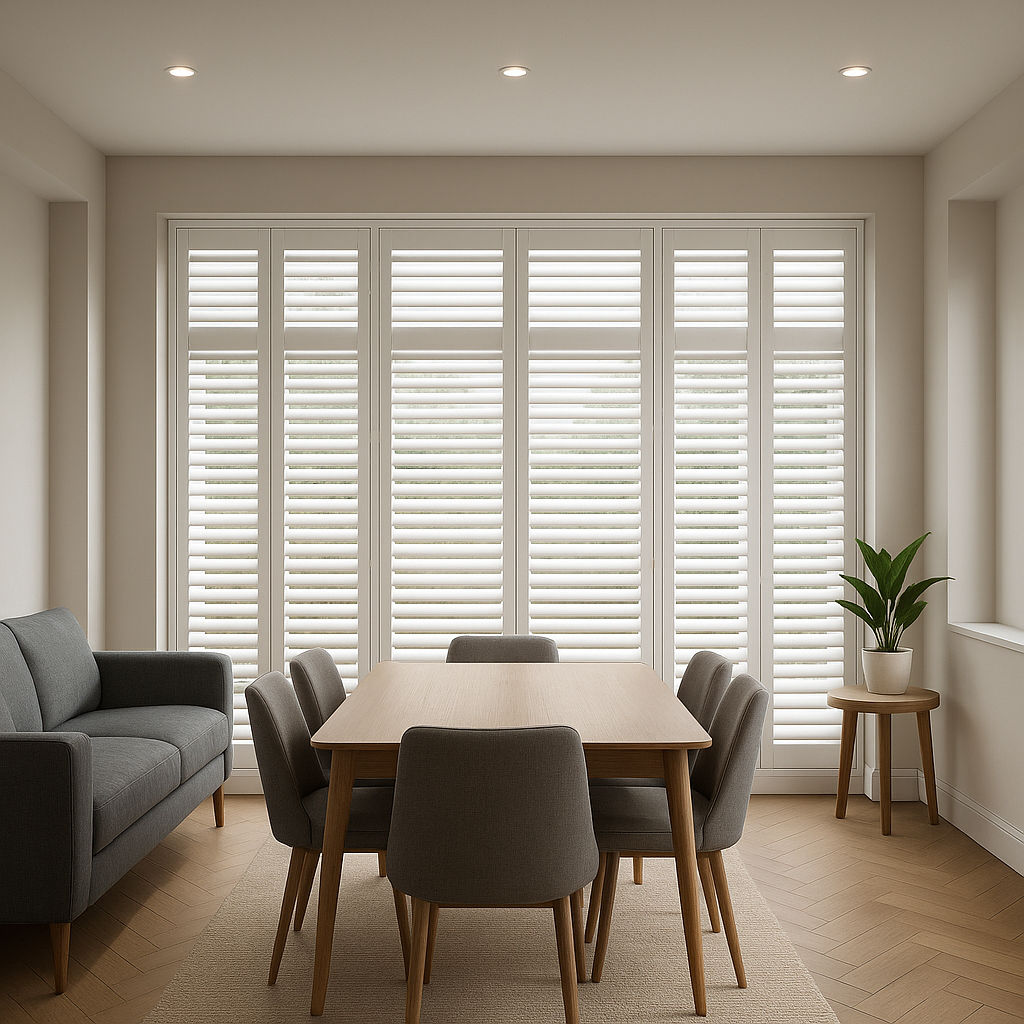
Tier-on-tier shutters (sometimes called double-hung or tier-on-tier plantation shutters) cover the full height of your window but split into two independent panels. This means the top and bottom sections can open or close separately – for example, you could close the lower panels for privacy and open the upper panels to let in light. UK experts describe tier-on-tier shutters as a “compromise between full height and café style,” offering the benefits of both. In practice, they function like two café-style shutters stacked in one frame, giving you maximum flexibility over light, privacy, and airflow.
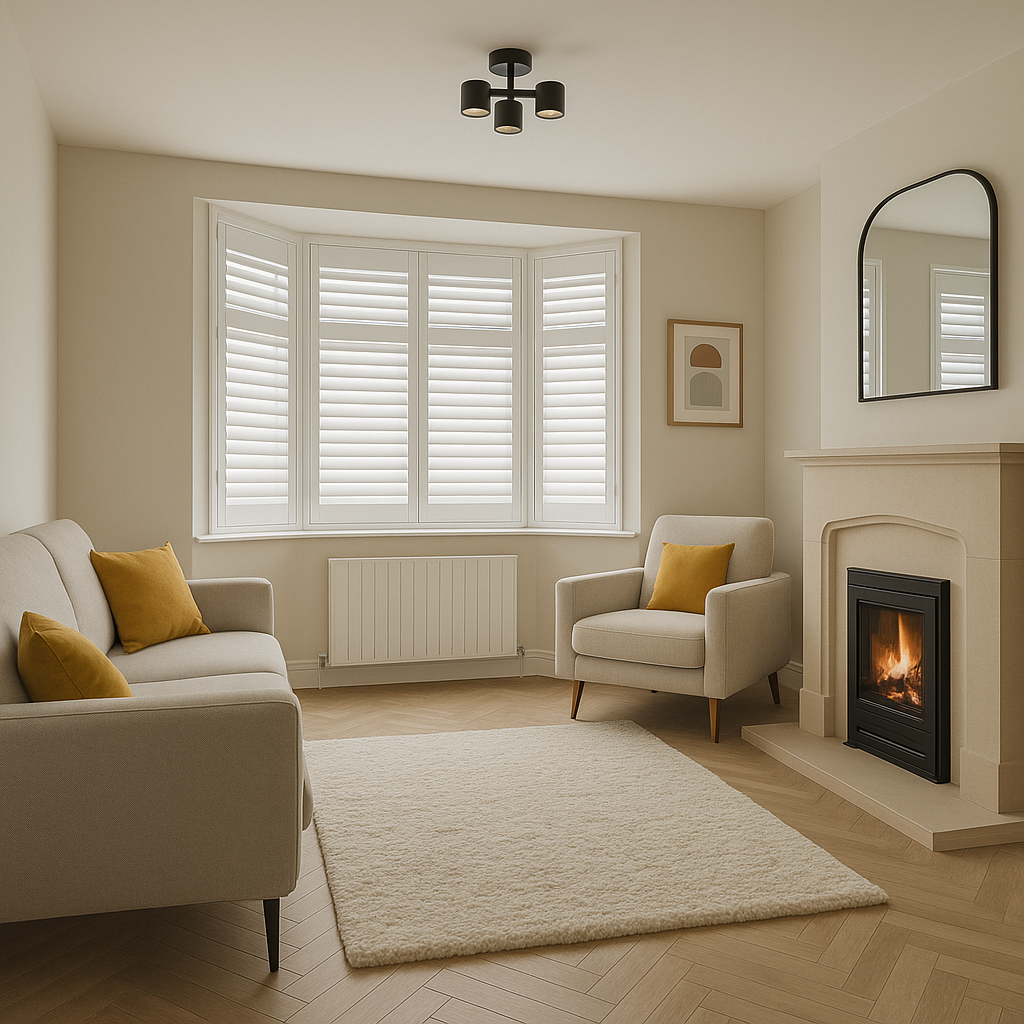
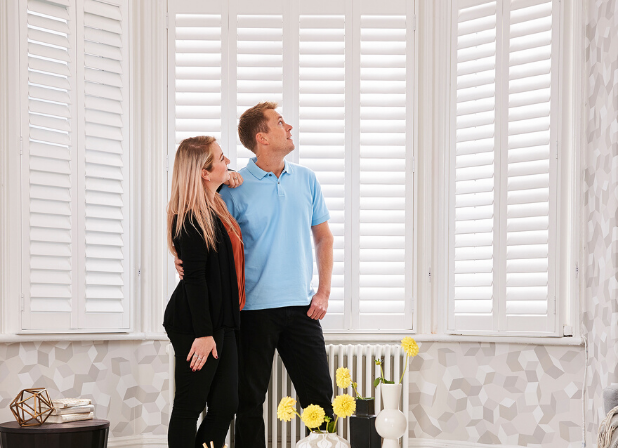
Tier-on-tier shutters fitted to a bay window in a living room. Each window section operates independently, giving “complete control over light and privacy”.
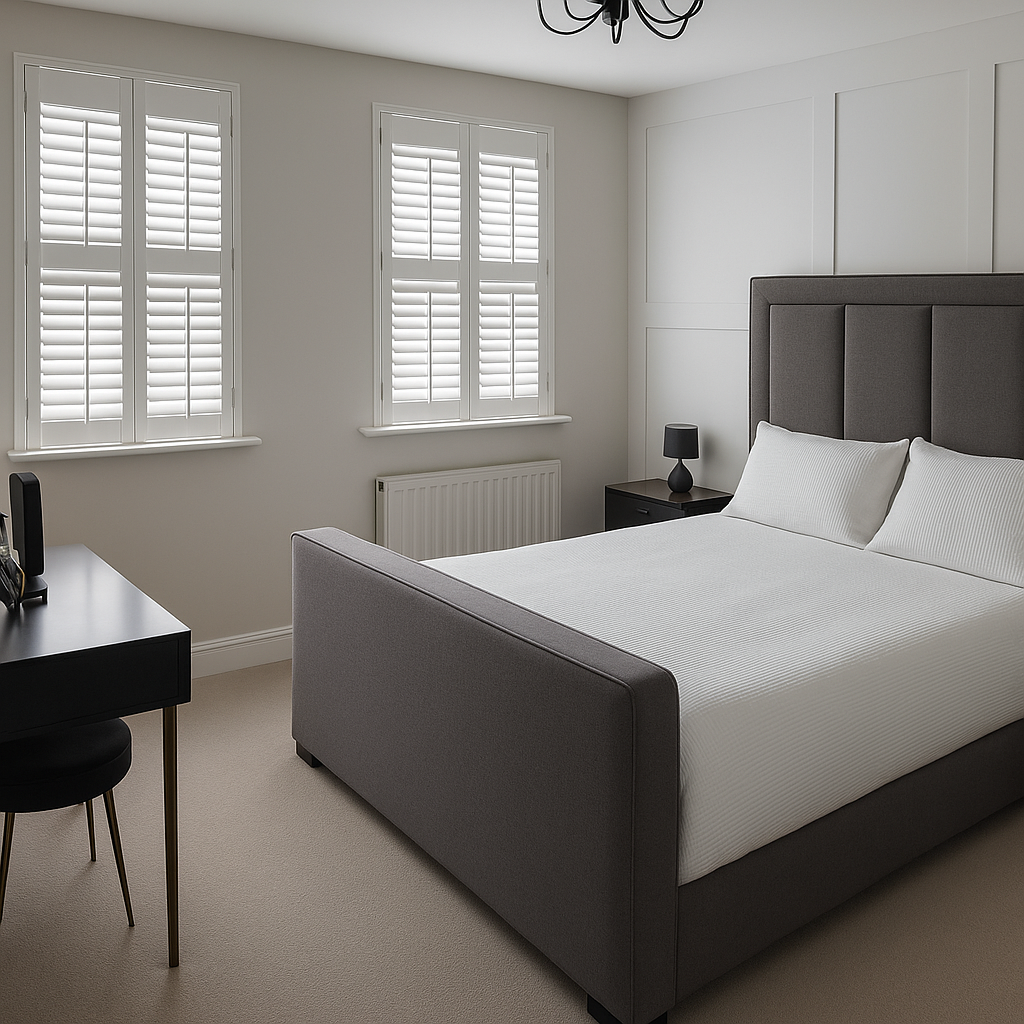
Tier-on-tier shutters are particularly useful for tall or segmented windows (like sash or bay windows) that need variable coverage. You can achieve “the best of both worlds” – full privacy on the lower half of the window while allowing natural light in from above. For example, with the bottom tier closed and the top tier open, you enjoy sunlight streaming into the room without sacrificing seclusion at street level. This versatility makes tier-on-tier ideal for living rooms, kitchens, bedrooms, or any space where you want both daytime brightness and the option of privacy.
Key Benefits of Tier-On-Tier Plantation Shutters
Tier-on-tier shutters combine practical advantages with aesthetic appeal. Compared to other window coverings (blinds, curtains, or simpler shutters), their key benefits include:
- Superior Light and Privacy Control: The split design lets you adjust light and privacy independently. You can fully open both panels for maximum daylight, fully close both for complete privacy (and insulation), or close the lower tier and open the upper tier to maintain privacy at eye level while brightening the room. As one shutter specialist explains, tier-on-tier shutters give you “optional full closure for full privacy and light blockage” or the ability to keep the bottom closed and the top open.
- Excellent Insulation and Energy Savings: Like other plantation shutters, tier-on-tier panels are thick and solid. When both tiers are closed, they trap heat inside in winter and block heat in summer, improving energy efficiency. Industry sources note that plantation shutters “act as great insulators,” helping to reduce heating bills. Because tier-on-tier shutters cover the entire window frame and fit tightly, they form an extra barrier against drafts and glare.
- Enhanced Acoustic Buffering: Sturdy shutters naturally reduce outside noise. A fully closed tier-on-tier shutter is a “perfect natural noise barrier,” whereas lightweight blinds or curtains may rattle in the wind. By comparison, blinds and curtains offer little sound insulation, so shutters can make a room noticeably quieter.
- Easy Maintenance: Solid shutter panels are simple to clean. You can quickly dust or wipe them down with a cloth – far easier than cleaning fabric blinds or curtains. For people concerned about allergens or cleaning effort, tier-on-tier shutters are low-maintenance. Unlike blinds (which can have cords and tight slats), a quick swipe is usually all that’s needed to keep shutters looking new.
- Custom Fit for Any Window: Tier-on-tier shutters are made-to-measure, so they can fit complex openings exactly. They can be manufactured for any shape – including angled bay windows, arch-tops, and uneven frames. One shutter company notes that these “made-to-measure Tier-on-Tier shutters are specially made to fit your window or door within the millimetre”. This ensures there are no gaps for light to leak through and the overall installation looks seamless.
- Aesthetic Appeal & Added Value: Plantation shutters are often chosen for their classic, high-end look. Tier-on-tier shutters in particular suit period and modern homes alike. A UK shutter maker highlights that tier-on-tier shutters give a “distinguished look” to Georgian or Victorian windows. Because they cover a window in two solid panels, when closed they can resemble elegant wood panelling. Plantation shutters are also known to add resale value – they make a home stand out with a stylish, cohesive finish. In short, tier-on-tier shutters boost curb appeal and functionality.
Tier-On-Tier Shutters for Bay Windows
Bay windows are a classic feature in many UK homes, and tier-on-tier shutters are ideal for them. In a bay, each window segment can effectively have its own tier-on-tier unit but within a single frame. Shutter Shop UK notes that this style allows “a great option to effectively treat each window in the bay as a separate shutter and panel”. In practice, that means you can open or fold each bay panel individually, getting the perfect light and privacy at every angle.
Tier-on-tier shutters cover each section of a bay window independently. Shutter specialists call this style “an ideal window dressing for bay windows,” since you can close the lower tier for privacy and open the top tier to let in light.
Experts point out that tier-on-tier shutters solve several bay window issues: they let daylight flood in from above while blocking street-level views below. Designers even note that bay windows were made “to allow maximum light,” and tier-on-tier shutters support that intent. By keeping the bottom panels closed and swinging open the top panels fully, you get full light entry with ongoing privacy. Moreover, on a ground-floor bay, privacy and heat loss are concerns. For such large windows, one source advises tier-on-tier is “probably the best choice” because it allows flexibility without exposing the entire room. (In contrast, floor-to-ceiling curtains or simple blinds would either block all light or all view.)
In summary, tier-on-tier shutters complement bay windows exceptionally well. They enable each facet of the bay to maintain its own light and privacy settings, creating an elegant, unified look.
Shutter Style Comparison
Tier-on-tier shutters are one of several popular louvred shutter styles used in UK homes. Each style suits different window shapes, privacy needs, and budgets. The comparison below makes it easier to choose the right option.
| Feature | Tier-on-Tier Shutters | Full-Height Plantation Shutters | Café-Style Shutters | Blinds & Curtains |
|---|
| Window Coverage | Full window split into top & bottom panels | Full window with single tall panels | Lower half only | Flexible depending on type |
| Panel Operation | Top and bottom operate independently | Single continuous panel (may include mid-rail) | Only lower section opens/closes | Raised/lowered or drawn open |
| Light Control | Very high – adjust each tier separately | Good – controlled by louvre tilt | Moderate – top always open | Varies by product |
| Privacy Control | Very high – close lower, open upper | Good – close panels or tilt louvres | Good at lower level only | Varies |
| Best For | Tall, sash & bay windows | Standard and wide windows | Street-facing rooms | Budget or temporary solutions |
| Insulation | Excellent | Excellent | Good | Low to moderate |
| Cost Level | Medium to high | Medium | Lower than tier-on-tier | Low to medium |
| Visual Impact | Premium, architectural look | Clean and classic | Light and casual | Depends on fabric/style |
Full-Height Plantation Shutters
Full-height plantation shutters run from the top to the bottom of the window in one continuous panel, sometimes with a mid-rail for added strength and louvre separation. They are a classic, all-purpose solution that works for most window types.
How they differ from tier-on-tier:
- Same full-window coverage
- No physical split between top and bottom sections
- Simpler construction and usually lower cost
- Light and privacy controlled only by tilting louvres (not by opening separate tiers)
Best choice when: you want a clean look and simple operation for standard-size windows.
Café-Style Shutters
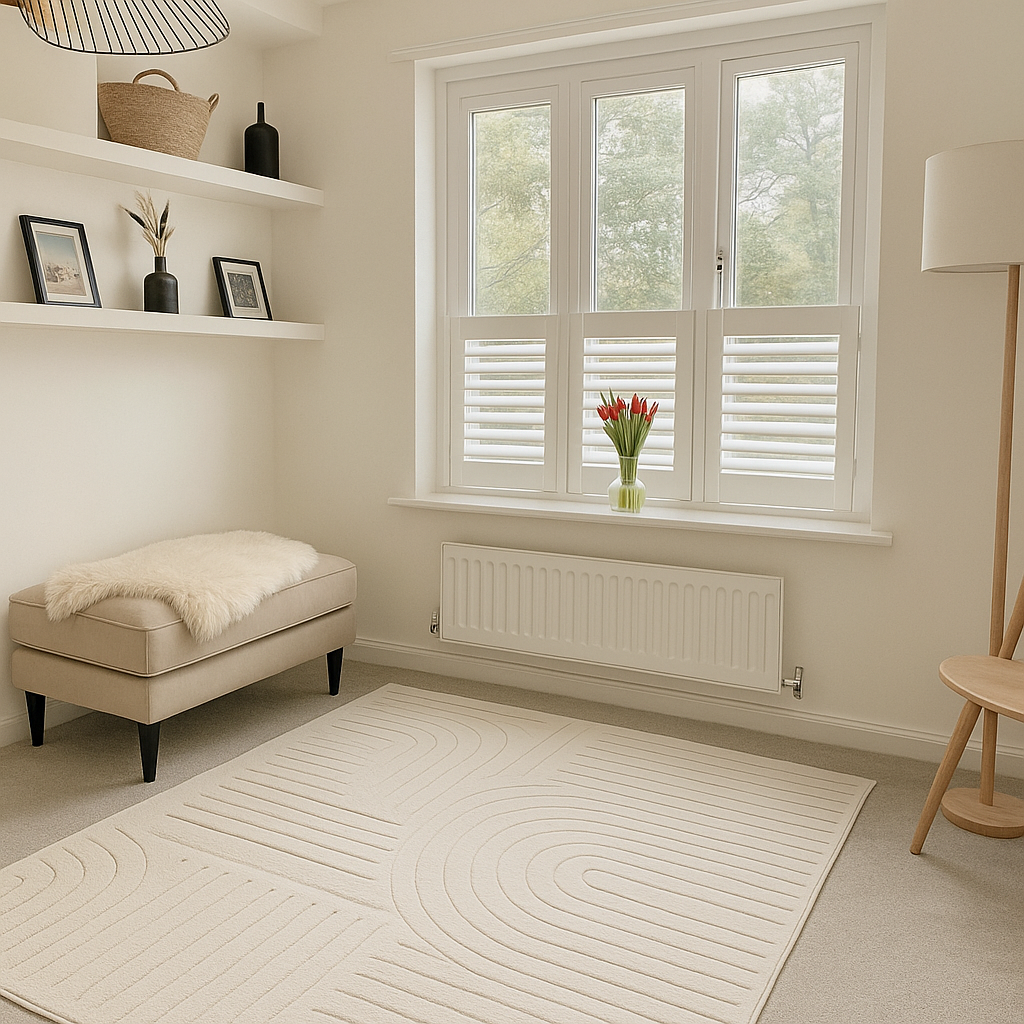
Café-style shutters cover only the lower portion of the window and leave the top fully open. They are commonly used on ground floors where privacy is needed at eye level but natural light is still welcome from above.
How they differ from tier-on-tier:
- Only bottom half is covered
- No option to close the top portion
- Fewer panels and fittings
- Lower cost and lighter appearance
Best choice when: privacy is needed only at street level and you want maximum daylight.
Blinds and Curtains
Blinds and curtains come in many forms—roller, Venetian, Roman, vertical, sheer, blackout, and more. They remain popular due to price range and design variety.
Compared with tier-on-tier shutters:
- Usually cheaper upfront
- Faster to install
- Less durable long-term
- Lower insulation and noise reduction
- Fabric requires more cleaning and replacement over time
- Cords and mechanisms can wear out
Best choice when: budget is the main factor or you want soft fabric styling.
Practical Selection Tips
- Choose tier-on-tier shutters for tall windows, bay windows, and period properties where flexible privacy and light control matter most.
- Choose full-height shutters for wide or very large windows where panel stability is important.
- Choose café-style shutters for ground-floor rooms needing privacy without blocking daylight.
Choose blinds or curtains for short-term, decorative, or budget-led window dressing.
Installation, Materials and Maintenance
Tier-on-tier shutters must be built and fitted carefully. Key points include:
- Made-to-Measure Installation: Every tier-on-tier shutter is custom-made to your exact window dimensions. You’ll need to specify not only the window width and height but also the divide point – the height at which the top panel ends and the bottom panel begins. This divide is often placed at the midpoint of the window, or aligned with any mullion. For tall windows, designers sometimes set the split about two-thirds up so that the larger bottom tier can remain closed for most of the day while still admitting light from above.
- Frame and Support: A tier-on-tier shutter requires a robust frame. Because the top panels have no support across their bottom (and vice versa), a four-sided frame (top, bottom, and both sides) is essential. This full framing keeps the panels square and prevents sagging. Even with a strong frame, very wide shutters (>1500 mm) can sometimes sag over time, so professionals often recommend full-height shutters for extra-wide spans.
- Materials: Tier-on-tier shutters come in materials similar to other plantation shutters:
- Hardwood (e.g., Paulownia, Basswood): Warm and natural-looking, ideal for living areas and bedrooms.
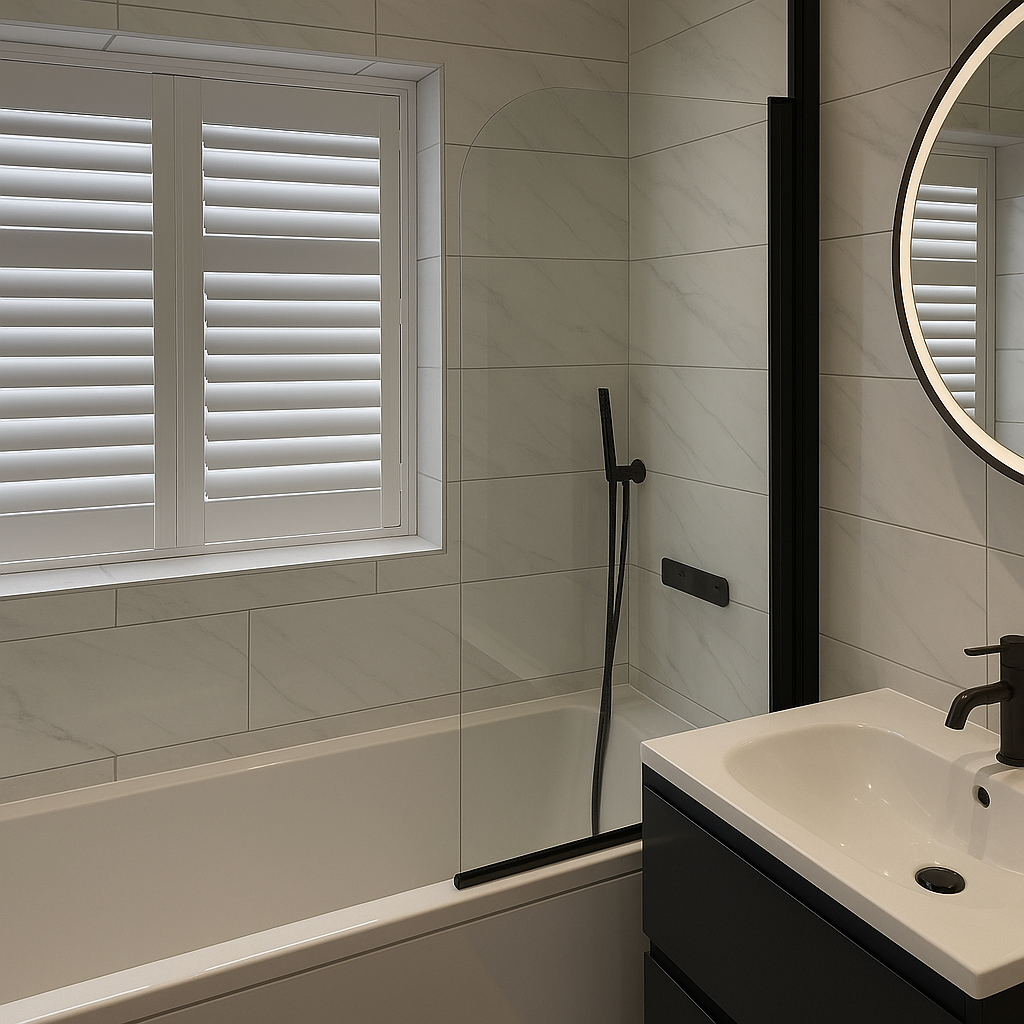
- Faux Wood/PVC: Completely waterproof and very stable. These are recommended for moisture-prone rooms like kitchens and bathrooms. They resist warping and are easy to wipe clean.
- Composite Options: Some brands offer engineered woods or composite shutters for extra strength.
- DIY vs Professional: Many DIY-friendly companies (like Shutters365) sell tier-on-tier shutters with instructions. However, experts often advise getting a professional measurer and installer for complex situations. As one UK shutter company notes, even though most windows can be self-measured, “we do recommend getting an expert… for the more difficult windows such as bay or shaped windows”. Proper installation ensures the panels align perfectly. After installation, minor hinge or panel adjustments are usually needed to keep the two tiers perfectly aligned.
- Cleaning and Care: As mentioned above, maintenance is simple – a quick wipe with a damp cloth or duster does the job. Avoid harsh chemicals. If you have wooden shutters, periodic gentle cleaning will keep the paint or stain fresh. Faux wood shutters need even less care. With their sturdy surfaces, tier-on-tier shutters often stay looking new for years with minimal effort.
- Cost Consideration: Tier-on-tier shutters generally cost more than a single-panel shutter of the same size, since they have extra panels, hinges, and frame materials. Installation can also be pricier or more labor-intensive. For example, one DIY shutter supplier advertises tier-on-tier shutters at up to 40% lower prices than big-brand shutters. Still, expect that a two-tier shutter will be somewhat more expensive than a full-height shutter of the same window, and several times more than a basic roller blind. Many homeowners find the extra cost worthwhile for the versatility and quality.
Expert Tips and Advice
- Window Size Matters: Ensure your window is tall enough for two tiers. Industry guides suggest that tier-on-tier style is “not ideal for any windows under 40” tall,” since each tier should be at least ~20” high to allow enough louvres. For shorter windows, a full-height shutter (with a mid-rail) or a cafe shutter might look better.
- Plan the Split Point: The dividing rail should align with the way you use the window. If privacy is the priority, place it lower so the bottom panel can remain closed longer. If you want the lower panel mostly open, place the split higher. Many experts recommend roughly the halfway point unless you have a specific reason not to.
- Consider Sun and Privacy Paths: Think about where the sun hits and sightlines. If onlookers can see in at sitting-eye level, plan to use the bottom tier closed. If upper windows face obstructions (like roof eaves), it might make sense to adjust the tier heights. Tier-on-tier is especially useful when the top and bottom of the window are used differently (e.g. plants on a sill, or a sofa blocking the lower part).
- Use a Four-Sided Frame: Insist on a solid frame during installation. This ensures longevity and prevents gaps. A top, bottom, and side frame will keep all panels square. Skimping on a frame (for example, using only a header above the top tier) can lead to misalignment. As shutter specialists say, tier-on-tier panels need support from all sides to avoid sagging.
- Ask the Experts: If in doubt, consult a professional. Shutter365 offer free measuring advice. In fact, a leading UK shutters blog recommends professional measuring for bay, sash, or unusually shaped windows. These experts can confirm if tier-on-tier is right for your specific window and lifestyle, or if another style might work better.
Related Read: 5 Reasons UK Homeowners Are Choosing No Drill Shutters Over Traditional Shutters
Conclusion
Tier-on-tier shutters are a smart choice for UK homeowners who want the look and benefits of plantation shutters with extra flexibility. They let you balance light, privacy, insulation, and style all in one custom window dressing. As Shutters365 puts it, these shutters offer “complete control over light and privacy” with independent top and bottom panels.
Whether you have a grand bay window, a bedroom overlooking a street, or a sunny kitchen needing ventilation, tier-on-tier shutters can adapt to your needs. With sturdy materials and proper installation, they can last for decades, quietly enhancing comfort and value in any home.
For UK readers considering tier-on-tier shutters, remember that comprehensive information and guides (like this one) are available from suppliers such as Shutters365 and other UK shutter specialists. They can provide tailored advice, free samples, and measuring services to ensure your new shutters fit perfectly and perform beautifully.